
Airport TV Explained: How ReachTV Is Changing Travel Forever
Airport TV explained in simple terms. Learn how ReachTV transforms airport entertainment with live content and smart advertising.
Read more
A businessman in an expensive suit takes seventeen selfies with a 24-inch bronze statue of a peeing boy in Brussels.
He looks mortified. His wife appears bored. Their teenage daughter seems ready to vanish into thin air.
Yet crowds gather daily at Manneken Pis—Brussels’ “greatest disappointment,” according to 40,000 TripAdvisor reviews. Tourists arrive expecting grandeur and discover exactly what the name suggests: “Little Man Pee.”
Welcome to reverse tourism, where disappointment has become the destination.
Travel planning has been flipped upside down. Instead of hunting for perfect ratings, savvy explorers actively seek the worst reviews like treasure maps leading to hidden experiences.
The trend exploded when social media influencers started documenting their visits to universally panned attractions. What began as ironic content became genuine appreciation for places that dare to disappoint.
Consider Prague’s Museum of Broken Relationships.
Critics label it “depressing.” Visitors call it “weird” and “unnecessary.” One reviewer wrote, “Who wants to see other people’s failed love stories? Absolute waste of time.”
Yet visitors spend hours wandering through rooms filled with objects from ended relationships, love letters, wedding rings, and a single red high heel. The museum doesn’t try to impress anyone. It simply exists, offering something increasingly rare in modern travel: authentic human connection.
No filters. No pretense. Just raw, unscripted reality.
Why are thousands deliberately choosing disappointing experiences? Psychology reveals fascinating truths about modern travelers.
Curiosity thrives on uncertainty.
Nowadays, every restaurant boasts an extensive online photo gallery. Meanwhile, every major attraction unfolds via pixel-perfect virtual tours. And ultimately, every experience is dissected in an infinite number of reviews before you even depart.
Badly reviewed places remain mysteries.
When someone writes “WORST FOOD EVER—staff incredibly rude, bathroom smells like despair,” adventurous travelers don’t see warnings; they see enigmas waiting to be solved. What inspires such passionate hatred? How terrible can it really be?
Authenticity hunger grows stronger daily.
Polished attractions feel manufactured. Curated experiences lack spontaneity. Perfect five-star reviews suggest sanitized encounters designed to please everyone, which often means they genuinely connect with no one.
Imperfection creates its own beauty.
Soviet brutalist architecture. Abandoned shopping malls. Failed theme parks with rusted roller coasters reaching toward empty skies.
These places photograph beautifully precisely because they’re not trying to be beautiful. They tell stories that polished attractions can’t: tales of dreams deferred, plans gone wrong, and humanity persisting in imperfect spaces.
The Reality: A small rock. In a cage. By a parking lot.
The Magic: This underwhelming chunk of stone represents one of America’s founding myths. Standing before it reveals something profound about how legends work, through belief, not grandeur.
Critics dismiss it as an “overpriced tourist trap with nothing else to see.”
The tower itself matters less than the spectacle surrounding it. Watching hundreds perform identical “holding up the tower” poses creates an accidental art installation about collective human behavior. The real attraction isn’t architectural; it’s anthropological.
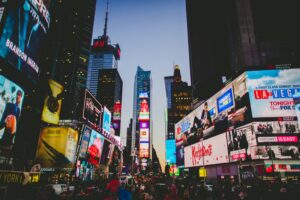
Complaints flood in daily: crowded, expensive, fake, overwhelming.
All true. And absolutely electrifying.
Times Square doesn’t apologize for being a capitalist fever dream; it celebrates the chaos with neon-bright honesty. The sensory overload becomes the point, not a problem to solve.
Tourists expect grandeur. They discover a modest bronze figure on a rock.
The statue’s underwhelming presence makes it more honest than any dramatic monument could be. It’s not performing for anyone, simply existing, like the fairy tale character it represents. Sometimes the most profound statements come through restraint.
Once a symbol of Cold War tension, now criticized as a “historical Disney World,” complete with costumed actors.
The commercialization isn’t accidental; it’s educational. Watching history get packaged and sold provides its lesson about how societies process traumatic pasts. The critique becomes part of the experience.
Visitors can’t get close. Views remain distant from most vantage points. Long hikes lead to disappointing photos.
Yet squinting at those white letters through LA smog captures something essential about Hollywood itself: the gap between dreams and reality, ambition and achievement. The inaccessibility mirrors the industry it represents.

Don’t lower standards. Transform them entirely.
Success isn’t measured by satisfaction; it’s calculated through stories collected. That terrible restaurant might serve awful food alongside fascinating characters. That disappointing monument could teach more about local culture than any acclaimed museum.
Reverse tourism generates authentic content. Genuine reactions to absurd situations, honest reviews of overhyped places, and comedy emerging from unmet expectations—these materials create themselves.
ReachTV’s documentary series follows reverse tourists through Eastern Europe’s most criticized attractions. Participants report having more genuine fun at “boring” Soviet monuments than anyone experienced at Prague Castle.
Ideal reverse tourism candidates:
Better to avoid this trend:
Reverse tourism represents more than quirky trend-chasing; it’s rebellion disguised as poor planning.
When algorithms predict preferences before experiences happen, seeking universally disliked places becomes independent. When destinations get optimized for social media, choosing the unphotogenic turns revolutionary.
These “failed” attractions offer guarantees five-star experiences can’t make: genuine surprise. Real, unmanufactured, authentic surprise.
Modern travel has become predictable. Reverse tourism restores mystery to exploration.
The businessman eventually abandoned his Manneken Pis selfie attempts. His wife purchased overpriced waffles from a nearby cart. Their daughter discovered the surrounding neighborhood shops were worth exploring.
Sometimes the worst-rated attraction opens doors to unexpected discoveries.
That’s reverse tourism’s secret: travel isn’t about finding perfect places; it’s about finding perfect moments within imperfect places.
The world overflows with beautiful disasters waiting for discovery.
Adventure hides in plain sight, usually at the bottom of review rankings.
Ready to explore travel’s beautiful failures? Follow @ReachTV on Instagram and X for daily reverse tourism discoveries, and subscribe to our website for access to our growing community of adventurous travelers who find magic in the margins.
The next great travel story probably hides in someone else’s worst review.
Airport TV explained in simple terms. Learn how ReachTV transforms airport entertainment with live content and smart advertising.
Read more
Airport hacks 2026 to skip lines, save time, and travel smarter. Learn expert tips for smooth airport travel.
Read more
Discover trending travel destinations 2026 with best spring break destinations 2026 and top summer travel trends worldwide
Read more