
Airport TV Explained: How ReachTV Is Changing Travel Forever
Airport TV explained in simple terms. Learn how ReachTV transforms airport entertainment with live content and smart advertising.
Read more
Elena’s heart sank as she watched her husband, David, struggle with his wheelchair at yet another tourist destination. After visiting twelve countries in their retirement travels, they’d encountered countless barriers, including steep ramps, broken elevators, and indifferent staff who treated accessibility as an afterthought. But stepping off the plane at Singapore’s Changi Airport, everything changed.
The automated immigration lanes welcomed them as a group, the floors gleamed with tactile indicators, and within minutes, David was navigating effortlessly through corridors designed with genuine inclusivity. For the first time in months, Elena saw her husband’s enthusiasm return, not despite his mobility needs but because Singapore had anticipated them.
This transformation reflects a profound truth: Singapore isn’t just accommodating to travelers with mobility challenges; it is genuinely welcoming. The city-state has systematically reimagined urban accessibility, creating an environment where wheelchairs and strollers glide smoothly through experiences that elsewhere might prove insurmountable.
Your Singapore adventure commences the moment you enter what many consider the world’s most accessible airport. Changi Airport offers complimentary use of wheelchairs and baby strollers on a first-come-first-served basis, but the real magic lies in their comprehensive approach to universal design.
The airport recently became the first airport in the world to introduce an automated lane for multiple travellers to perform self-immigration clearance as a group. This makes it possible for wheelchair users to pass through immigration alongside their companions without separation, a thoughtful innovation that preserves dignity and reduces stress.
For families traveling with young children, the convenience extends beyond mere equipment provision. The airport provides wheelchairs and strollers that are free for use. Under the Care@Changi touchpoints, we have priority lanes at Taxi Stands and Special Assistance Lanes at Departure and Arrival Immigration, ensuring your journey begins with efficiency rather than exhaustion.
Pro Tip: Reserve your wheelchair or stroller online before arrival through Changi’s dedicated booking system to guarantee availability during peak travel periods.
Singapore’s public transportation system represents accessibility excellence that rivals world-class standards. All our MRT and LRT stations in Singapore are barrier-free! Wherever possible, rubber fillers are installed to plug the gap between the platforms and the trains, eliminating the treacherous gaps that plague many international metro systems.
The commitment extends beyond infrastructure to human support. Our station staff and service ambassadors are also ready to provide assistance, transforming potentially stressful transfers into seamless transitions. Each station features wide fare gates, tactile ground surface indicators, and dedicated passenger lifts that function reliably, small details that collectively create transformative experiences.
Bus travel presents equally impressive accommodation. All new buses procured from 2024 onwards will be fitted with automated ramps to help wheelchair and personal mobility aid users to board and alight, representing Singapore’s ongoing commitment to technological advancement in accessibility.
However, stroller families should note an important consideration: Prams/strollers are allowed on board buses, but must be folded up, requiring parents to plan accordingly for longer journeys with sleeping children.
Singapore’s premier destinations demonstrate that accessibility and spectacular experiences aren’t mutually exclusive. Gardens by the Bay offers a free wheelchair-accessible shutter service between the Bayfront MRT station and the two conservatories for those with mobility issues. The smooth and wide walkways, alongside special ramps, lifts, barrier-free routes, and non-slip gantries, make it easy to navigate on wheels.
This thoughtful engineering extends throughout the attraction, where climate-controlled conservatories provide respite from tropical heat while maintaining complete accessibility. The iconic Supertree Grove features elevator access to the aerial walkway, allowing wheelchair users to experience the same breathtaking canopy views as ambulatory visitors.
The Singapore Botanic Gardens, a UNESCO World Heritage site, showcases how historical preservation can coexist with modern accessibility standards. Paved pathways wind through centuries-old rainforest sections, while strategically placed benches provide rest stops for visitors with varying energy levels.
Insider Strategy: Download the Gardens by the Bay app to locate the nearest accessible restrooms and plan routes that minimize backtracking, especially valuable for visitors managing energy conservation.
Singapore’s cultural attractions have embraced accessibility as a core design principle rather than an afterthought. The National Gallery Singapore, housed in two beautifully restored colonial buildings, features state-of-the-art elevators and ramps that blend seamlessly with historical architecture.
Chinatown, often challenging for wheelchair users in other cities, surprises visitors with its accessibility improvements. While some traditional shophouses retain their original elevated thresholds, major temples like the Buddha Tooth Relic Temple provide ramps and accessible entrances that welcome all visitors to experience Singapore’s rich cultural tapestry.
The Marina Bay Sands SkyPark presents a remarkable achievement in accessible design. High-speed elevators transport visitors 200 meters skyward to observation decks engineered with wheelchair-friendly surfaces and panoramic viewing areas that accommodate various heights and mobility aids.
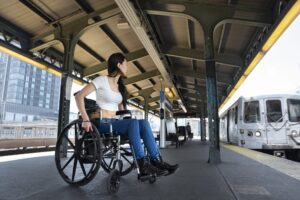
Understanding Singapore’s accessibility infrastructure requires strategic planning that transforms potential obstacles into minor considerations. The city’s comprehensive approach means most popular destinations connect seamlessly through accessible pathways, but knowing specific details maximizes your experience.
Transportation Mastery:
Accommodation Excellence: Hotels across all price ranges maintain accessibility standards that often exceed international requirements. Many properties feature roll-in showers, accessible balconies, and emergency evacuation procedures specifically designed for guests with mobility impairments.
Climate Considerations: Singapore’s tropical environment creates unique challenges. The extensive underground walkway system connecting major shopping centers and MRT stations provides an air-conditioned refuge from intense humidity, particularly valuable for visitors whose medications or conditions are sensitive to heat.
Singapore’s smart city initiatives extend to accessibility applications that provide real-time information crucial for mobility planning. The MyTransport. SG app includes accessibility features showing elevator status, platform locations, and estimated travel times, accounting for mobility device navigation.
Several specialized apps enhance the Singapore accessibility experience:
Beyond infrastructure excellence lies Singapore’s cultural transformation toward genuine inclusivity. Singaporean people were very friendly and always ready to offer directions or assistance. This attitude reflects a society that treats accessibility as a shared responsibility rather than an individual burden.
Moreover, this cultural shift appears in countless small interactions. For instance, restaurant staff proactively arrange alternative seating. In addition, museum guides adjust tour pacing for mixed-ability groups. Shop owners even install temporary ramps without being asked. Together, these actions show how inclusivity has become part of daily life in Singapore. These behaviors reflect Singapore’s systematic cultural education about disability awareness and inclusive hospitality.
Singapore’s accessibility features rarely carry additional costs—a refreshing contrast to destinations where accommodation requests generate supplementary fees. Public transportation rates remain identical regardless of accessibility needs, attractions maintain consistent pricing, and most accommodation upgrades for accessibility represent room category improvements rather than surcharges.
Budget-Conscious Tips:
Singapore’s year-round tropical climate eliminates seasonal accessibility concerns common in temperate destinations. However, understanding crowd patterns and weather intensities optimizes comfort and navigation efficiency.
Optimal Timing Considerations:
Singapore’s accessibility infrastructure continues advancing through ongoing technological integration and community feedback systems. It is one of the most convenient cities in the world to get around with ease, even for the elderly and wheelchair users. There are many initiatives that have been introduced in the past decade to make our infrastructures more user-friendly.
Recent innovations include sensory-friendly attraction hours, multi-language accessibility apps, and artificial intelligence-powered navigation systems that provide personalized route optimization based on individual mobility requirements.
Singapore demonstrates that truly accessible travel isn’t about overcoming barriers—it’s about eliminating them entirely. When cities prioritize universal design, everyone benefits: parents with strollers navigate more easily, elderly visitors feel welcomed, and people with disabilities experience genuine inclusion rather than grudging accommodation.
Your Singapore adventure awaits with unprecedented accessibility and genuine hospitality. Every pathway has been considered, every facility designed with inclusion as the foundation rather than an addition.
Ready to experience Singapore’s accessibility revolution firsthand? Download the ReachTV app for detailed accessibility guides, real-time facility updates, and insider tips that ensure your Singapore journey exceeds every expectation.
Airport TV explained in simple terms. Learn how ReachTV transforms airport entertainment with live content and smart advertising.
Read more
Airport hacks 2026 to skip lines, save time, and travel smarter. Learn expert tips for smooth airport travel.
Read more
Discover trending travel destinations 2026 with best spring break destinations 2026 and top summer travel trends worldwide
Read more