
From Matcha to Wellness Shots: The New Airport Lifestyle
Explore the airport wellness trend. From matcha to wellness shots, see how healthy drinks and cafés are changing airport travel culture.
Read more
At ReachTV, we’ve watched travelers trade guidebooks for sketching pads in airport lounges—eyes alight with the hunger to read cities, not just see them. Consider this your master key. Unlock Vienna’s Baroque sonnets, Brussels’ Art Nouveau secrets, and Belgrade’s Brutalist ballads. The continent’s autobiography is etched in stone. Turn the page.
Europe isn’t just a continent—it’s a living museum where every street corner tells a different story. From the gilded excess of imperial Austria to the raw concrete poetry of post-war Netherlands, these cities don’t just house history; they are history, built in marble, brick, and steel.
Ready to trade your typical tourist trail for an architectural adventure? Here’s your curated journey through Europe’s most visually arresting destinations, complete with insider secrets and design-savvy travel tips.
Vienna doesn’t do architecture—it performs it. This city is a treasure trove for Art Nouveau, Baroque, and contemporary architecture, with landmarks like Schönbrunn Palace, Belvedere Palace, and St. Stephen’s Cathedral creating a theatrical backdrop for daily life.
Architecture Focus: Baroque splendor meets Secessionist innovation.
Must-See: The golden dome of Karlskirche, the geometric perfection of Schönbrunn’s gardens, and Otto Wagner’s stunning Art Nouveau metro stations
Design Insider Tip: Skip the tourist-packed Café Central. Instead, discover Café Landtmann’s Belle Époque interiors, where Freud himself once pondered over morning coffee.
Photo Opportunity: The Naschmarkt’s Saturday morning light hitting the Secession Building’s golden dome—pure architectural gold.
Barcelona proves that architecture can be pure joy. Antoni Gaudí didn’t just design buildings—he sculpted fantasies, creating a cityscape that looks like it emerged from a beautiful dream.
Architecture Focus: Catalan Modernism (Art Nouveau) at its most exuberant
Must-See: La Sagrada Família’s forest-inspired interior, the dragon-scale roof of Casa Batlló, and the mosaic wonderland of Park Güell
Local Secret: While crowds flock to Gaudí’s famous works, explore the equally stunning Hospital de Sant Pau—a UNESCO World Heritage site with stunning Modernist pavilions but half the crowds.
Architect’s Note: Notice how Gaudí incorporated natural light and ventilation long before “green building” was trendy—genius wrapped in whimsy.
Prague’s architecture reads like a history book written in stone. Medieval spires pierce the sky while Baroque facades tell stories of empire, and hidden gems of Czech Cubism add avant-garde surprises to every walk.
Architecture Focus: Gothic foundations with Baroque overlay and unique Cubist accents
Must-See: St. Vitus Cathedral’s soaring Gothic heights, the colorful Baroque of Lesser Town, and the world’s only Cubist streetlamp
Hidden Gem: The Dancing House (Fred and Ginger) by Vlado Milunić and Frank Gehry, a postmodern dance frozen in glass and concrete against the medieval skyline.
Local Experience: Duck into the courtyards off Wenceslas Square—these hidden architectural gems house boutique hotels and cafés in converted medieval and Art Nouveau spaces.
Rome layers its architectural history like sedimentary rock. One moment you’re marveling at the Pantheon’s perfect concrete dome (still the world’s largest unreinforced concrete structure), the next you’re in EUR, Mussolini’s vision of “Third Rome” with its haunting Fascist-era monuments.
Architecture Focus: Ancient Roman engineering meets Renaissance genius meets Fascist ambition.
Must-See: The Pantheon’s perfect proportions, St. Peter’s Basilica’s Renaissance grandeur, and EUR’s stark Palazzo della Civiltà Italiana
Architect’s Pick: The Maxxi Museum by Zaha Hadid—Rome’s bold leap into contemporary architecture, proving the Eternal City isn’t stuck in the past.
Time-Saver: Visit EUR on Sunday mornings when the district is beautifully empty, perfect for photographing its monumental architecture without crowds.
Paris is architecture as urban theater. Baron Haussmann’s 19th-century renovation created the city’s signature wide boulevards and uniform facades, but contemporary Paris isn’t afraid to break the rules with bold modern additions.
Architecture Focus: Classical harmony meets contemporary intervention.
Must-See: Notre-Dame’s Gothic flying buttresses, the glass pyramid at the Louvre, and La Défense’s corporate canyon of glass and steel
Instagram Alternative: Forget the Eiffel Tower crowds—head to Rue Crémieux for Paris’s most colorful street, or the modern apartments of the 13th arrondissement for striking contemporary photography.
Design Detail: Notice how even modern Parisian buildings maintain the traditional cream stone facades and consistent roofline heights—urban design at its most disciplined.
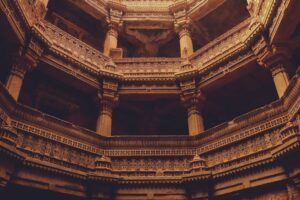
Brussels houses some of the world’s finest Art Nouveau architecture, with four major townhouses by Victor Horta—Hôtel Tassel, Hôtel Solvay, Hôtel van Eetvelde, and Maison & Atelier Horta—recognized as UNESCO World Heritage Sites.
Architecture Focus: Art Nouveau’s birthplace and finest expressions
Must-See: Victor Horta’s house-museum, the stunning ironwork of Hôtel Tassel, and the Art Nouveau facades scattered throughout Ixelles
Dining with Design: Book a table at Restaurant Vincent, an authentic Art Nouveau brasserie where you can dine surrounded by original stained glass, tilework, and curved wooden details.
Pro Tip: Many of Horta’s masterpieces are private residences only visible from the street, but the Horta Museum offers the complete Art Nouveau immersion experience.
Rotterdam turned post-war reconstruction into an architectural revolution. Bombed flat in WWII, the city rebuilt itself as a laboratory for radical design, becoming Europe’s most experimental urban landscape.
Architecture Focus: Bold post-war modernism and contemporary innovation
Must-See: Piet Blom’s tilted Cube Houses, the technicolor Markthal, and Rem Koolhaas’s striking public library
Modern Nomad Spot: Work from the iconic Van Nelle Factory (UNESCO site), a 1930s industrial masterpiece transformed into a creative hub with co-working spaces overlooking the Nieuwe Maas.
Architecture Walk: The Museumkwartier showcases how modern Dutch architecture creates community; notice how each building contributes to public space at street level.
Belgrade’s architecture tells the complex story of 20th-century Yugoslavia through concrete and ambition. The city’s Brutalist monuments aren’t just buildings; they’re sculptural statements about power, progress, and identity.
Architecture Focus: Socialist modernism and Brutalist monuments
Must-See: The Western City Gate (Genex Tower), the Museum of Contemporary Art, and the Sava Congress Centre
Cultural Context: These buildings represent Yugoslavia’s unique position between East and West, massive, confident, and unapologetically different from both Soviet and Western models.
Local Perspective: What might seem harsh to Western eyes represents pride and aspiration to many locals, and architecture is a national identity.
Budapest, Hungary: Neo-Gothic Parliament meets Ottoman thermal baths and Art Nouveau apartment blocks.
Stockholm, Sweden: Scandinavian modernism at its most liveable, from Gunnar Asplund’s City Library to contemporary sustainable design
Ljubljana, Slovenia: Jože Plečnik’s quirky postmodern interventions transformed this small capital into an architectural gem.
These aren’t just cities—they’re chapters in the story of human creativity. Every dome, every facade, and every bold modern intervention represents someone’s vision of how we should live, work, and dream together.
Whether you’re sketching Gothic details in Prague’s courtyards, photographing Art Nouveau ironwork in Brussels, or contemplating Brutalist monuments in Belgrade, you’re not just traveling—you’re reading the autobiography of European civilization, written in stone, steel, and concrete.
Ready to see Europe through an architect’s eyes?
Read more articles and blogs on our website featuring:
Explore the airport wellness trend. From matcha to wellness shots, see how healthy drinks and cafés are changing airport travel culture.
Read more
Discover set-jetting destinations travelers visit after Netflix and HBO shows. Explore filming locations that turn TV moments into trips.
Read more
Discover how airport automation improves travel with biometric boarding, AI systems, and faster check-ins.
Read more